Thursday, April 7, 2011

[E793.Ebook] Ebook Subcortical Structures and Cognition: Implications for Neuropsychological Assessment, by Leonard F. Koziol, Deborah Ely Budding

Ebook Subcortical Structures and Cognition: Implications for Neuropsychological Assessment, by Leonard F. Koziol, Deborah Ely Budding

By saving Subcortical Structures And Cognition: Implications For Neuropsychological Assessment, By Leonard F. Koziol, Deborah Ely Budding in the gizmo, the method you review will additionally be much less complex. Open it and start reading Subcortical Structures And Cognition: Implications For Neuropsychological Assessment, By Leonard F. Koziol, Deborah Ely Budding, easy. This is reason why we recommend this Subcortical Structures And Cognition: Implications For Neuropsychological Assessment, By Leonard F. Koziol, Deborah Ely Budding in soft data. It will not disturb your time to get the book. In addition, the on-line system will certainly also ease you to search Subcortical Structures And Cognition: Implications For Neuropsychological Assessment, By Leonard F. Koziol, Deborah Ely Budding it, even without going someplace. If you have link net in your office, house, or gizmo, you can download and install Subcortical Structures And Cognition: Implications For Neuropsychological Assessment, By Leonard F. Koziol, Deborah Ely Budding it straight. You might not additionally wait to obtain the book Subcortical Structures And Cognition: Implications For Neuropsychological Assessment, By Leonard F. Koziol, Deborah Ely Budding to send out by the vendor in other days.

Subcortical Structures and Cognition: Implications for Neuropsychological Assessment, by Leonard F. Koziol, Deborah Ely Budding

Subcortical Structures and Cognition: Implications for Neuropsychological Assessment, by Leonard F. Koziol, Deborah Ely Budding


Subcortical Structures and Cognition: Implications for Neuropsychological Assessment, by Leonard F. Koziol, Deborah Ely Budding

Ebook Subcortical Structures and Cognition: Implications for Neuropsychological Assessment, by Leonard F. Koziol, Deborah Ely Budding

How a suggestion can be obtained? By looking at the stars? By checking out the sea and considering the sea interweaves? Or by checking out a book Subcortical Structures And Cognition: Implications For Neuropsychological Assessment, By Leonard F. Koziol, Deborah Ely Budding Everybody will certainly have specific unique to gain the inspiration. For you that are dying of books and constantly obtain the inspirations from publications, it is actually wonderful to be below. We will certainly show you hundreds compilations of the book Subcortical Structures And Cognition: Implications For Neuropsychological Assessment, By Leonard F. Koziol, Deborah Ely Budding to check out. If you like this Subcortical Structures And Cognition: Implications For Neuropsychological Assessment, By Leonard F. Koziol, Deborah Ely Budding, you can likewise take it as your own.

Do you ever before recognize guide Subcortical Structures And Cognition: Implications For Neuropsychological Assessment, By Leonard F. Koziol, Deborah Ely Budding Yeah, this is an extremely fascinating e-book to review. As we informed previously, reading is not type of responsibility activity to do when we have to obligate. Checking out ought to be a behavior, an excellent habit. By reviewing Subcortical Structures And Cognition: Implications For Neuropsychological Assessment, By Leonard F. Koziol, Deborah Ely Budding, you can open up the brand-new world as well as obtain the power from the world. Everything could be acquired via the e-book Subcortical Structures And Cognition: Implications For Neuropsychological Assessment, By Leonard F. Koziol, Deborah Ely Budding Well briefly, book is quite effective. As exactly what we provide you here, this Subcortical Structures And Cognition: Implications For Neuropsychological Assessment, By Leonard F. Koziol, Deborah Ely Budding is as one of reading e-book for you.

By reading this book Subcortical Structures And Cognition: Implications For Neuropsychological Assessment, By Leonard F. Koziol, Deborah Ely Budding, you will certainly obtain the most effective point to acquire. The brand-new thing that you don't need to spend over money to reach is by doing it by on your own. So, exactly what should you do now? See the link page and also download and install guide Subcortical Structures And Cognition: Implications For Neuropsychological Assessment, By Leonard F. Koziol, Deborah Ely Budding You can get this Subcortical Structures And Cognition: Implications For Neuropsychological Assessment, By Leonard F. Koziol, Deborah Ely Budding by on-line. It's so very easy, right? Nowadays, modern technology truly supports you tasks, this online e-book Subcortical Structures And Cognition: Implications For Neuropsychological Assessment, By Leonard F. Koziol, Deborah Ely Budding, is as well.

Be the very first to download this publication Subcortical Structures And Cognition: Implications For Neuropsychological Assessment, By Leonard F. Koziol, Deborah Ely Budding as well as allow read by coating. It is extremely simple to read this publication Subcortical Structures And Cognition: Implications For Neuropsychological Assessment, By Leonard F. Koziol, Deborah Ely Budding since you don't should bring this printed Subcortical Structures And Cognition: Implications For Neuropsychological Assessment, By Leonard F. Koziol, Deborah Ely Budding all over. Your soft file e-book could be in our gizmo or computer system so you could take pleasure in checking out anywhere as well as every time if needed. This is why whole lots varieties of people additionally check out guides Subcortical Structures And Cognition: Implications For Neuropsychological Assessment, By Leonard F. Koziol, Deborah Ely Budding in soft fie by downloading the publication. So, be one of them that take all advantages of reading the publication Subcortical Structures And Cognition: Implications For Neuropsychological Assessment, By Leonard F. Koziol, Deborah Ely Budding by online or on your soft documents system.

Subcortical Structures and Cognition: Implications for Neuropsychological Assessment, by Leonard F. Koziol, Deborah Ely Budding

Subcortical Structures and Cognition is written for maximum clinical applicability, making it important practical reading. It is the first book to discuss the cognitive and emotional aspects of subcortical pathology at the level of clinical neuropsychology.

  • Sales Rank: #892401 in Books
  • Published on: 2010-05-14
  • Released on: 2010-05-14
  • Original language: English
  • Number of items: 1
  • Dimensions: 9.25" h x .99" w x 6.10" l, 1.29 pounds
  • Binding: Paperback
  • 405 pages

Review
From the reviews: "Given its broad coverage and the clarity of writing, it should be very valuable for graduate students and in courses. This book opens the door to creativity by inviting neuropsychologists to develop new methodologies of investigations, following the demonstration that the cortico-centric model of cognition is no longer tenable. The authors have made a great job in bringing complex issues into simple and meaningful lines." (M.-U. Manto, The Cerebellum, Published online: 10 September 2009) "Drs. Koziol and Budding have written a highly readable and thought-provoking book that will challenge the reader’s current knowledge and help one to look beneath the surface. It is a must read for … neuropsychologist and should be on the reading list for every neuropsychology graduate student. … It is interesting to ponder … if this text becomes a standard in the neuropsychological training curriculum. … this book will assuredly give the reader a ‘deeper’ understanding of the brain." (William S. MacAllister, The Clinical Neuropsychologist , Issue 1-3, 2009) "This is a fine summary of a great deal of literature on the basal ganglia and cerebellum and of their intimate relationships with the cortical forebrain. ... This book applies a long overdue corrective to a discipline that in some sense has been blinded by the simplistic corticocentric view of brain function. If the book prompts neuropsychologists to read outside their traditionally rather constricted domains (the neuropsychological testing literature) and to more fully explore other domains of neuroscience, it will have performed a double service. I recommend it highly." (Douglas F. Watt, Harvard Medical School, Archives of Clinical Neuropsychology 25 (2010) 153–155)

From the Back Cover

Subcortical Structures and Cognition

Implications for Neuropsychological Assessment

Leonard F. Koziol, Private Practice, Arlington Heights, Illinois

Deborah Ely Budding, Private Practice, Manhattan Beach, California

The study of neuropsychology traditionally begins with geography: the neocortex as the seat of cognition and behavior, and the subcortical regions coordinating movement. Subcortical Structures and Cognition breaks with this traditional view, arguing for a practice-oriented rethinking of brain organization.

The authors’ structural/functional analysis redefines the cerebral hemispheres, basal ganglia, and cerebellum as operating in parallel to control cognition, affect, and behavior as well as movement. Case studies and empirical data flesh out this intricate scenario, linking pathology in subcortical structures with psychiatric, learning, and developmental disabilities. These findings are at the forefront of clinical research, significant not only in theoretical terms but also leading to new advances in testing, assessment, and treatment.

Highlights of the book:

  • The shift from cortex-centered to cortical-subcortical neuropsychology.
  • Functional anatomy of the cerebellum and basal ganglia, and their roles in cognition, emotion, and behavior.
  • The neuroanatomy of experiential and reinforcement-based learning.
  • Review of cognition as an extension of the motor control system.

  • Cases illustrating the relationships between cortical and subcortical systems in various types of pathology.
  • The current state of neuropsychological assessment.
  • Results of experimental studies, including imaging technologies.
  • Future directions for neuropsychology, neurology, and related fields.

The only book of its kind, Subcortical Structures and Cognition is written for maximum clinical applicability, making it important practical reading for neuropsychologists, rehabilitation specialists, speech, occupational, and physical therapists, cognitive neuroscientists, and psychiatrists.

About the Author

Dr. Leonard F. Koziol is a clinical psychologist with specialty board certifications in Neuropsychology and Pediatric Neuropsychology. He works with children, adolescents, and adults with attention or concentration problems, memory loss, or learning disabilities. Dr. Koziol has served as a forensic psychologist expert in legal proceedings. Dr. Koziol is currently part of the Clinical Faculty at Chicago Medical School, Finch University Hospital Clinic, North Chicago, IL; the Consulting Neuropsychology Faculty at Fielding Institute, Santa Barbara, CA; and the Adult Faculty at Illinois School of Professional Psychology, IL, from where he is also a Professional Psychology graduate. His awards include: Fellow, National Academy of Neuropsychology – 2004; and Fellow, American College of Professional Neuropsychology – 1995.

Deborah Ely Budding is a clinical neuropsychologist practicing in Southern California. She worked as a writer and editor prior to training as a psychologist and neuropsychologist. She specializes in evaluating children, adolescents and adults with neurodevelopmental disorders and has a particular interest in integrating emotional and cognitive, as well as conscious and unconscious aspects of function. She holds specialty board certifications in Neuropsychologyand Pediatric Neuropsychology.

Most helpful customer reviews

26 of 29 people found the following review helpful.
Invaluable for neuropsychologists, psychiatrists, neurologists, developmental pediatricians, and psychologists
By drdanac
One of the main concepts presented within this book is that the basal ganglia play a central role in adaptation. They do this by serving as a "gate" of sorts that "decides" when to release predominantly subcortically mediated, automatic behaviors in the context of familiar and over learned situations, in which case releasing such behaviors is efficient and effective. On the other hand, they "decide" not to release such behaviors in favor of opening channels for cortically based, higher level reasoning in the context of circumstances that are novel. It is much more economical to do what is familiar, as cortical resources are at a premium and employing them requires cognitive effort. By the same token, if one employs overlearned responses in the context of a situation that is new, one may move through it with relative ease, but at the expense of accuracy and at the expense of taking advantage of the opportunity for new learning that such circumstances provide.

This framework has applications to multiple aspects of behavior and thinking. It could even be applied to some of the central tenets within the philosophy of science, and particularly Thomas Kuhn's assertion in The Structure of Scientific Revolutions, that scientific communities resist accepting new paradigms to explain phenomena that are thought to be explained adequately with existing paradigms. Existing paradigms might be considered a familiar, procedural way of doing things which, while they are economical, may function in this manner at the expense of allowing for new learning. To accept a new paradigm requires cognitive effort, and unless science can be persuaded that the new ideas are, in essence, worth the effort, there is a default to the familiar, overlearned ways of understanding.

Subcortical Structures and Cognition requires such a paradigm shift - in this case, from a predominantly cortically based way of understanding behavior in which left-right brain dichotomies and the verbal-nonverbal aspects of thinking with which they are associated, to a vertically organized way of understanding behavior in which the role of deep brain structures are highlighted, in the context of their dynamic and reciprocal relationships with cortex. The book will reward those scientists and practitioners willing to expend the cognitive effort necessary to reframe their familiar ways of thinking to accommodate these ideas.

Paradigms shift when they have to do so, on the basis of overwhelming evidence that precludes the old paradigm being considered as sufficient to explain a phenomenon. "Wild science" and assertions founded in the absence of persuasive evidence do not result in paradigm changes, but paradigms must shift when the right conditions are met - when all the evidence points to the correctness of a new way of thinking to replace that which no longer provides the best fit. Perhaps the Kuhn-ian analogy is not a perfect one, because the authors have not replaced the concept of hemispheric specialization, but they have immeasurably enriched aspects of it while they highlight its limitations and provide rich information to fill these gaps. Their ideas are far from "wild science." To the contrary, the ideas within this book are founded upon an enormous body of literature that they extensively and thoughtfully review. It is integrated elegantly within their theoretical assertions, in a manner that allows multiple aspects of thinking and behavior to be understood in ways that have not heretofore been explained in a satisfactory manner in the absence of this knowledge.

Right-left/nonverbal-verbal dichotomies and a corticocentric view made sense in the context of the information available about brains historically, which was predominately based on examining the impact of injuries to adult, fully formed brains. Since the historical limitations in imaging technology have been overcome, however, the information available about brain function has expanded exponentially. Continuing to fit our data into old ways of explaining things is no longer necessary nor is it satisfying. Just as the ability to gate the release of automatic, procedural learning in favor of higher level, cortical reasoning serves human adaptation by allowing people to take advantage of opportunities to learn about and master a broader range of demands, clinicians and practitioners who make the cognitive effort necessary to read and understand the information presented in this volume have the opportunity to gain an adaptive advantage as will the patients they serve.

How much cognitive effort is necessary to make this shift? The first several chapters can be a bit intimidating, in which the authors describe in detail the prototypical frontal-basal ganglia circuits that function interactively to subserve movement, cognition, affect, and motivation, and they explicate dynamic changes in neuroanatomy that govern tasks as they move from higher order control to being mediated more automatically. While the neuropsychologists, psychologists, psychiatrists, developmental pediatricians, and neurologists who stand to gain so much by reading this book have all been schooled in neuroanatomy, many may not have been exposed to the level of neuroanatomical detail that the first few chapters describe. And even for those who have been taught this material, it is not likely to be automated information that can be retrieved without a good deal of cognitive effort. The chapters are exceptionally well written, but the material is dense and those of us who ordinarily feel a sense of mastery within our field of practice might feel a bit unbalanced by how much these first two chapters can illustrate to us that we do not know. It may be tempting to read the chapter summaries and shelve the book as a reference. Don't make this mistake. Instead, read the first chapters to grasp the concepts that the authors are describing - which you will - and move forward. Those who may not have felt smart during the first three chapters will be rewarded by feeling very smart thereafter. For the book is exceptionally well written, theoretical concepts are presented in terms that are easily assimilated, and there are multiple real-world analogies incorporated to explicate ideas as well. As an extra treat, the authors introduce each chapter with passages from references as diverse as Mark Twain, Albert Einstein, Yogi Berra, Aristotle, Jonas Salk, and Oliver Wendell Holmes.

But move forward only if you are prepared that some sacred cows may have to be, if not sacrificed, then moved to a less prominent place in the barn. Among them is the value of composite index test scores that are calculated on the basis of multiple subtest scores each of which, itself, may rely on a variety of subcomponent functions and may represent the integration of a broad spectrum of functions that bear little relationship to one another. Lest we fret at having familiar frameworks for thinking disrupted, rest assured that in the place of the centrality of such scores, the authors provide a framework within which we can glean so much more information about the patients we see within the same data sets that we are accustomed to collect. They provide a means by which we can approach a consideration of quantitative and qualitative performance of the subtest scores contributing to the indices. They highlight the critical importance of understanding the nuanced differences in the demands made by subtests that purport to measure the same construct. They argue for the importance an ipsative consideration of the relationship between the individual scores, which, if they are considered in isolation, may obscure important information. They highlight the importance of recognizing the manner in which statistics may distort information, such as by forcing behaviors that are not normally distributed into a "bell shaped curve." They argue that this may obscure the importance of errors which appear "normal" on the basis of these statistical machinations, but which should more rightly be considered as pathognomonic signs.

Another sacred cow who needs to move aside is a collection of familiar ideas about the functions that specific, familiar tests measure. Rather than taking a test's "name" at face value and conceptualizing its demand according to that name, the authors posit that what defines a neuropsychologist is the ability to analyze the cognitive requirements of different tests and interpret findings based upon a solid grasp of underlying neuroanatomic functions that drive test performance, in consideration of important historical information about a patient and important qualitative observations of his or her behavior. Performance on tests that have long been assumed to measure frontal or temporal cortical processing can be impacted, potentially, by pathology anywhere within the circuitry that connects frontal and temporal regions with the subcortical structures and circuits that subserve them. The authors provide a compelling review of literature to support these views, and present fascinating data from a neuropsychological assessment of a patient with a hypothalamic tumor that was impinging upon basal forebrain circuitry. His neuropsychological tests results, interpreted blind, would lead to a sure conclusion of cortical impairment, but his frontal lobes were, in fact, entirely unimpacted. It is likely that the review of any of the various cases in this book will lead clinicians reading this book to consider, or reconsider, a variety of the conclusions they have reached for patients they have tested in the absence of having this framework with which to consider their findings.

The authors point out that as our knowledge of brain functioning expands, the applicability of neuropsychology and neuropsychological assessment to populations beyond brain injured adults has increasingly been possible. Child neuropsychology is a dynamically evolving field that stands to gain much by being able to consider the assessment of children with an appreciation of subcortical processes. It is also the field that has been most hampered by a corticocentric view, given that cortical functions have only minimally come "on-line" for young children who are still in such a dynamic state of neurological development. Focusing on tests that measure cortical functioning for this population is akin to looking on Main Street for a dime dropped on Maple Street because the light is better there. Being able to replace a corticocentric view with an approach to testing children that highlights and explains processes taking place below the cortex - where most of the action is in this population - is of extraordinary value. The authors highlight the centrality of subcomponents of "attention," which they argue, are perhaps better characterized as processes of "intention" insofar as they subserve the individual's ability to form intentions and to bring these intentions to fruition. The centrality of the basal ganglia's role in helping the individual know when to start a behavior, stop a behavior, not start a behavior, and not stop one is at the core of it role in attention/intention. The dynamic relationship of these basal ganglia functions and cerebellar processes that regulate the rate, rhythm and force of the behavior that is released, is also highlighted. The authors provide compelling, and readily assimilated, explanations of the manner in which dysfunction in these systems underlies a broad spectrum of problematic, maladaptive behaviors. They provide applications of their ideas to a consideration of multiple disorders that are often the focus of a child assessment, including attentional disorders,learning disorders and autism spectrum disorders.

The book also broadens the application of neuropsychology and neuropsychological assessment into child and adult psychiatric populations, by presenting a model of thinking and behavior that erases the illusory distinction between "psychiatric disorders" versus disorders that are more organically based. Instead, the book presents a way of understanding many psychiatric disorders as akin to developmental disorders that are founded upon dysfunction in the subcortical systems that heretofore have been considered to play a modulatory role in motor functions. Arguing that these structures play the same modulatory role in thinking and emotional control that they play in motor control provides a framework in which multiple psychiatric symptoms can be understood. Understanding these principles, the value of comprehensive neuropsychological assessment for a psychiatrically disordered patient who has never experienced a known neuropsychological insult can be appreciated.

Those who read this book should be willing to elaborate on the notions about language being a left-hemisphere function; should be willing to consider the cluster of behaviors that are construed as criteria for Nonverbal Learning Disorders in a manner that does not cast language in a central role; should be willing to consider the gross limitations of the Diagnostic Statistical Manual for Mental Disorders (DSM) to describe the processes captured by neuropsychological assessment, and should be prepared to construct reports in which the DSM label at its conclusion is its least interesting and informative component.

In addition to providing extensive review of the existing literature and framing their theory accordingly, the authors provide case material from a broad variety of patients. Their examination of these data in the context of their theoretical assertions idea is nothing less than fascinating. Whereas clinicians are likely to be familiar with many of the instruments used in these evaluations, walking through these data with the authors in an interpretive role is akin to the rich information one can glean from a museum tour with a gifted docent. Accordingly, the data may look familiar, but they can be seen in much greater detail and context with the benefit of this interpretive strategy.

Despite its straightforward, scientific title, the book is nothing less than inspiring. It is easy to imagine that many clinicians will be drawn, after reading this material, to pull old files and re-examine data from gleaned from patients who, with the benefit of this context of approach, could be understood so much more fully and dimensionally. If the community is lucky, these authors will go on to develop formal measures for procedural learning that will allow these concepts to be codified within the framework of standard processes for measurement. The central tenet of the book however, would seem to posit that while such formal procedures will be important and exciting, it is the responsibility of the clinician to bring higher order control to consideration of the data in every case. The more we fulfill our responsibilities to familiarize ourselves with neuroanatomy and neurocognitive constructs, and the more automatic and familiar this knowledge becomes to us, the more we will liberate our cortexes to bring higher order control and creative thinking to our field to move us to the next step.

14 of 16 people found the following review helpful.
Indispensable - Makes Brain-Behavior Relationships Coherent
By Keith J. Kobes
The modern student of neuropsychology is exposed to a vast and disparate array of information, and is taught that the essence of neuropsychology is the degree to which brain-behavior relationships can be understood and meaningfully applied to a clinical population. Modern neuropsychology textbooks provide an excellent and detailed introduction to the basics of cortical functioning. To some extent they also provide exposure to subcortical structures, but mostly with an emphasis on their role in movement. At the same time more and more journal and scholarly articles are calling attention to the contributions of subcortical structures to cognition, although their focus is generally narrow and specific to their research interest.

A growing body of evidence is giving rise to the notion that our knowledge of cortical functioning, although vast, is insufficient for fully appreciating the complexity of brain-behavior relationships. It seems the field of neuropsychology is laboring under the insufficiency of a corticocentric model that simply cannot integrate the complexities revealed by more modern research. The sense is that future advancements in knowledge of cortical functioning, even knowledge afforded by modern imaging methodologies, will not be enough to account for the growing body of evidence of the role of subcortical structures in cognition.

Philosophers of science might say that the field of neuropsychology is poised for a major integrative shift. If not already apparent, I want to plainly state that I think Subcortical Structures and Cognition articulates that change. Scaled to neuropsychology, Leonard Koziol and Deborah Budding have ushered in what amounts to a paradigm shift in thinking. Their work presents a synthesis of knowledge. I liken it to the movement from a view of the earth as flat and two dimensional to a global and three-dimensional understanding. Writing on the leading edge of evolution in their field of expertise, they present a strong case for a shift from a corticocentric to a hierarchical view of brain-behavior relationships.

The theme throughout the book is captured by the key notion that what subcortical structures do for movement they also do for cognition and emotion. This simple statement eloquently captures the essence of the author's message. This notion forms a scaffold that allows the reader to navigate below the cortex and appreciate the contributions of subcortical structures to cognition. The idea forms an organizing principle that affords coordinates for every step. Just as a fractal model encodes complexity with a simple underlying structure this organizing principle makes brain-behavior relationships coherent. The result of reading this book is an "ah ha" experience that activates the brain's reward system and rivets your attention to every page. In fact, it even explains how that happens!

The bonus is that the book is very readable. It is well researched, well organized, and well written. The authors take you step by step through an historical context, an introduction to the vertical organization of the brain, a translation from movement to cognition as applied to the basal ganglia and cerebellum, illustrations of parallel processing of these structures, and implications for understanding cognition and emotion in clinical presentations. You will learn fascinating things about unconscious processes in the brain with regard to numerous clinically relevant topics like multiple memory systems, working memory, attention, and even intuition, just to name a few. Finally, this book is not just an academic exercise that leaves the reader to figure out the application. The book is rich with case examples that examine raw data and the authors draw out the basic brain-behavior relationships articulated earlier in the text.

Reading this book will bring you up to speed with what is happening at the leading edge of knowledge of brain-behavior relationships. It will equip you with insights that will empower you to look at neuropsychology through a much more useful lens. It will excite you with new energy for excellence in your clinical practice. Enjoy!

9 of 10 people found the following review helpful.
fine summary of basal ganglia and cerebellar relationships with the cortical forebrain
By D. F. Watt
I can only echo the high praise of this book by the previous 10 reviewers (all five stars), while offering perhaps a slightly different perspective on the volume's contribution and context.

What is most interesting for me is to get the sense from other reviewers on this website that the emphasis on critical roles played by the basal ganglia and cerebellar systems in cognition is news. It may be news to neuropsychologists trained in a corticocentric model of brain function, but frankly, it's not news to anybody else in neuroscience. Indeed, much of the fundamental work on which this fine review was based took place in the 80s and 90s. If anything, this suggests that the theoretical neuroscience foundations in clinical neuropsychology are badly out of date.

I realized roughly 20 years ago that virtually all of my early training in neuropsychology about the brainstem and subcortical areas was so incomplete as to be virtually wrong. We were told that the brainstem was a "dumb arousal center" and that virtually all of the important aspects of consciousness were contributed by the cortex. The real story of an enormous hierarchy of vertically integrated systems, as I found out, is much more interesting than our traditional oversimplification and dismissal of the subcortical brain. The brainstem and particularly the mesodiencephalon may be the original anatomical foundation for integrative mechanisms underpinning a conscious state and allowing the cortex to make its critical contributions, but without which the cortex is completely nonfunctional. The best evidence for this of course comes from the tragic cases of persistent vegetative state associated with severe upper brainstem/mesodiencephalic injuries. The cortex is completely intact anatomically, but the person (including any version of cognitive processing) is completely gone.

One probably could offer an even more radical message than the central concept in the book (that the cerebellum and basal ganglia are critically involved in all cognition). It isn't simply that the cerebellum and basal ganglia are critical to cognition - this of course is absolutely true as the authors beautifully outline. One might offer the even more radical conclusion that cognition itself rests on the foundations of homeostasis and emotion, with consciousness erected on ancient mechanisms predating the cortical forebrain. Cortico-cognitive processing comes along rather late in the evolutionary story, as an adaptive addition to integrative mechanisms that predated the cortical forebrain by many millions of years.

As a test of the hypothesis that cognition is grounded to and energized by fundamental emotional and homeostatic mechanisms, try to just conceptualize a cognitive activity that is not motivated by fundamental emotional or homeostatic needs. This thought experiment quickly underlines that the predominant image of a cognitive/cortical brain as an "information processing" engine, untethered to the body and the body's needs (and particularly the need for social connection) is illusory. This book applies a long overdue corrective to a discipline that in some sense has been blinded by the simplistic corticocentric view of brain function. I recommend it highly.

See all 14 customer reviews...

Subcortical Structures and Cognition: Implications for Neuropsychological Assessment, by Leonard F. Koziol, Deborah Ely Budding PDF
Subcortical Structures and Cognition: Implications for Neuropsychological Assessment, by Leonard F. Koziol, Deborah Ely Budding EPub
Subcortical Structures and Cognition: Implications for Neuropsychological Assessment, by Leonard F. Koziol, Deborah Ely Budding Doc
Subcortical Structures and Cognition: Implications for Neuropsychological Assessment, by Leonard F. Koziol, Deborah Ely Budding iBooks
Subcortical Structures and Cognition: Implications for Neuropsychological Assessment, by Leonard F. Koziol, Deborah Ely Budding rtf
Subcortical Structures and Cognition: Implications for Neuropsychological Assessment, by Leonard F. Koziol, Deborah Ely Budding Mobipocket
Subcortical Structures and Cognition: Implications for Neuropsychological Assessment, by Leonard F. Koziol, Deborah Ely Budding Kindle

Subcortical Structures and Cognition: Implications for Neuropsychological Assessment, by Leonard F. Koziol, Deborah Ely Budding PDF

Subcortical Structures and Cognition: Implications for Neuropsychological Assessment, by Leonard F. Koziol, Deborah Ely Budding PDF

Subcortical Structures and Cognition: Implications for Neuropsychological Assessment, by Leonard F. Koziol, Deborah Ely Budding PDF

[P570.Ebook] Free Ebook Teaching YA Lit through Differentiated Instruction, by Susan L. Groenke, Lisa Scherff

Free Ebook Teaching YA Lit through Differentiated Instruction, by Susan L. Groenke, Lisa Scherff

Also the rate of an e-book Teaching YA Lit Through Differentiated Instruction, By Susan L. Groenke, Lisa Scherff is so economical; many individuals are truly stingy to allot their money to get the publications. The other factors are that they feel bad and also have no time at all to go to the publication shop to search guide Teaching YA Lit Through Differentiated Instruction, By Susan L. Groenke, Lisa Scherff to read. Well, this is modern-day age; so numerous e-books can be got easily. As this Teaching YA Lit Through Differentiated Instruction, By Susan L. Groenke, Lisa Scherff and a lot more publications, they could be entered very quick methods. You will certainly not require to go outdoors to obtain this e-book Teaching YA Lit Through Differentiated Instruction, By Susan L. Groenke, Lisa Scherff

Teaching YA Lit through Differentiated Instruction, by Susan L. Groenke, Lisa Scherff

Teaching YA Lit through Differentiated Instruction, by Susan L. Groenke, Lisa Scherff


Teaching YA Lit through Differentiated Instruction, by Susan L. Groenke, Lisa Scherff

Free Ebook Teaching YA Lit through Differentiated Instruction, by Susan L. Groenke, Lisa Scherff

New updated! The Teaching YA Lit Through Differentiated Instruction, By Susan L. Groenke, Lisa Scherff from the best author as well as author is now available right here. This is guide Teaching YA Lit Through Differentiated Instruction, By Susan L. Groenke, Lisa Scherff that will certainly make your day checking out comes to be completed. When you are looking for the printed book Teaching YA Lit Through Differentiated Instruction, By Susan L. Groenke, Lisa Scherff of this title in the book store, you might not discover it. The issues can be the minimal versions Teaching YA Lit Through Differentiated Instruction, By Susan L. Groenke, Lisa Scherff that are given in guide shop.

There is no question that book Teaching YA Lit Through Differentiated Instruction, By Susan L. Groenke, Lisa Scherff will still provide you motivations. Even this is merely a publication Teaching YA Lit Through Differentiated Instruction, By Susan L. Groenke, Lisa Scherff; you can find many styles as well as sorts of books. From captivating to experience to politic, and also scientific researches are all offered. As just what we mention, here we offer those all, from popular authors as well as author on the planet. This Teaching YA Lit Through Differentiated Instruction, By Susan L. Groenke, Lisa Scherff is one of the collections. Are you interested? Take it currently. How is the method? Read more this article!

When somebody ought to go to the book establishments, search store by store, rack by shelf, it is really problematic. This is why we offer the book collections in this internet site. It will certainly reduce you to look the book Teaching YA Lit Through Differentiated Instruction, By Susan L. Groenke, Lisa Scherff as you such as. By browsing the title, author, or writers of the book you really want, you could find them promptly. In the house, office, and even in your way can be all ideal area within internet links. If you wish to download and install the Teaching YA Lit Through Differentiated Instruction, By Susan L. Groenke, Lisa Scherff, it is very easy then, since now we extend the link to buy as well as make offers to download and install Teaching YA Lit Through Differentiated Instruction, By Susan L. Groenke, Lisa Scherff So simple!

Curious? Naturally, this is why, we intend you to click the link web page to check out, and after that you can take pleasure in guide Teaching YA Lit Through Differentiated Instruction, By Susan L. Groenke, Lisa Scherff downloaded and install up until finished. You can save the soft documents of this Teaching YA Lit Through Differentiated Instruction, By Susan L. Groenke, Lisa Scherff in your gadget. Naturally, you will bring the gizmo anywhere, won't you? This is why, each time you have extra time, every time you could delight in reading by soft copy publication Teaching YA Lit Through Differentiated Instruction, By Susan L. Groenke, Lisa Scherff

Teaching YA Lit through Differentiated Instruction, by Susan L. Groenke, Lisa Scherff

Sales of young adult literature are stronger than ever. When we pay attention to what teens are reading outside of the classroom, we see that young adult novels are the books teens buy with their allowance money, pass around to their friends, and write about in their blogs or on fan fiction sites. These are the books that tell teens their lives matter and that their own life stories are important.

Authors Susan L. Groenke and Lisa Scherff offer suggestions for incorporating YA lit into the high school curriculum by focusing on a few key questions, including: Which works of YA literature work better for whole-class instruction and which are more suitable for independent reading and/or small-group activities? What can teachers do with YA lit in whole-class instruction? How can teachers use YA novels to address the needs of diverse readers in mixed-ability classrooms?

Each chapter opens with an introduction to and description of a different popular genre or award category of YA lit science fiction, realistic teen fiction, graphic novels, Pura Belpr� award winners, nonfiction texts, poetry, historical YA fiction and then offers suggestions within that genre for whole-class instruction juxtaposed with a young adult novel more suited for independent reading or small-group activities. Groenke and Scherff present a variety of activities for differentiated instruction for the novel they've chosen for whole-class study, and provide an appendix of titles, by genre, that interest adolescent readers.

This book helps English teachers address the different reading needs and strengths adolescents bring to our classrooms. Highlighting some of the best young adult literature published since 2000, this book shows that YA lit is for all students and deserves a more central place in secondary literature instruction.

  • Sales Rank: #643465 in Books
  • Published on: 2010-10-27
  • Original language: English
  • Number of items: 1
  • Dimensions: 9.25" h x 7.50" w x .50" l, .75 pounds
  • Binding: Paperback
  • 177 pages

Most helpful customer reviews

3 of 3 people found the following review helpful.
Excellent resource for H.S. English Teachers
By Amy Richter
"Teaching YA Lit" is an excellent guide for English teachers in the middle school and high school. It offers a number of ways to encourage reading for the struggling and/or reluctant reader through the use of YA literature in the classroom. It also offers a number of valuable and PRACTICAL teaching strategies to stimulate student meaningful engagement with text. The list of suggested YA titles is valuable in itself. (This review was written by Eric Richter, husband of Amy Richter, who has been teaching English at the secondary level for over 30 years.)

3 of 3 people found the following review helpful.
"Teaching YA Lit through Differentiated Instruction"
By Marie
This book is a wonderful resource for Secondary Teachers. I have taught children from the ages of 4 years old to 18 year olds. I found this book VERY helpful. The CD was a VERY nice plus as well. Time saver.Yes, the book is expensive, but I just found it a wealth of fresh ideas for this age level. Always looking for ways to help children learn to improve their reading and to teach in a way that would develop enthusiasm for books!

1 of 1 people found the following review helpful.
Good text for YA Lit course
By Amanda L. Ingrassia
Good for my YA Lit class. Uses specific texts and explains lesson plans- can be hard to follow if you have not read the books. But, they take a practical approach and make the content approachable for teachers. Also, the chapters are manageable with many graphic organizers. The intro by the authors is my favorite part.

See all 3 customer reviews...

Teaching YA Lit through Differentiated Instruction, by Susan L. Groenke, Lisa Scherff PDF
Teaching YA Lit through Differentiated Instruction, by Susan L. Groenke, Lisa Scherff EPub
Teaching YA Lit through Differentiated Instruction, by Susan L. Groenke, Lisa Scherff Doc
Teaching YA Lit through Differentiated Instruction, by Susan L. Groenke, Lisa Scherff iBooks
Teaching YA Lit through Differentiated Instruction, by Susan L. Groenke, Lisa Scherff rtf
Teaching YA Lit through Differentiated Instruction, by Susan L. Groenke, Lisa Scherff Mobipocket
Teaching YA Lit through Differentiated Instruction, by Susan L. Groenke, Lisa Scherff Kindle

Teaching YA Lit through Differentiated Instruction, by Susan L. Groenke, Lisa Scherff PDF

Teaching YA Lit through Differentiated Instruction, by Susan L. Groenke, Lisa Scherff PDF

Teaching YA Lit through Differentiated Instruction, by Susan L. Groenke, Lisa Scherff PDF

[R871.Ebook] Free Ebook The Kolob Theorem, New Edition with Added Chapter: A Mormon's View of God's Starry Universe, by Lynn M Hilton

Free Ebook The Kolob Theorem, New Edition with Added Chapter: A Mormon's View of God's Starry Universe, by Lynn M Hilton

Yeah, hanging around to read the book The Kolob Theorem, New Edition With Added Chapter: A Mormon's View Of God's Starry Universe, By Lynn M Hilton by on-line can likewise provide you favorable session. It will certainly ease to stay connected in whatever condition. This way can be more interesting to do and easier to check out. Now, to get this The Kolob Theorem, New Edition With Added Chapter: A Mormon's View Of God's Starry Universe, By Lynn M Hilton, you could download and install in the web link that we offer. It will certainly aid you to obtain very easy method to download the book The Kolob Theorem, New Edition With Added Chapter: A Mormon's View Of God's Starry Universe, By Lynn M Hilton.

The Kolob Theorem, New Edition with Added Chapter: A Mormon's View of God's Starry Universe, by Lynn M Hilton

The Kolob Theorem, New Edition with Added Chapter: A Mormon's View of God's Starry Universe, by Lynn M Hilton


The Kolob Theorem, New Edition with Added Chapter: A Mormon's View of God's Starry Universe, by Lynn M Hilton

Free Ebook The Kolob Theorem, New Edition with Added Chapter: A Mormon's View of God's Starry Universe, by Lynn M Hilton

Checking out a book The Kolob Theorem, New Edition With Added Chapter: A Mormon's View Of God's Starry Universe, By Lynn M Hilton is sort of simple task to do each time you want. Also checking out whenever you want, this activity will not interrupt your other activities; lots of people generally read guides The Kolob Theorem, New Edition With Added Chapter: A Mormon's View Of God's Starry Universe, By Lynn M Hilton when they are having the downtime. Exactly what about you? What do you do when having the leisure? Do not you spend for useless points? This is why you have to obtain the book The Kolob Theorem, New Edition With Added Chapter: A Mormon's View Of God's Starry Universe, By Lynn M Hilton and also try to have reading behavior. Reviewing this publication The Kolob Theorem, New Edition With Added Chapter: A Mormon's View Of God's Starry Universe, By Lynn M Hilton will certainly not make you ineffective. It will give more benefits.

Surely, to enhance your life top quality, every book The Kolob Theorem, New Edition With Added Chapter: A Mormon's View Of God's Starry Universe, By Lynn M Hilton will certainly have their specific lesson. However, having specific awareness will make you really feel a lot more certain. When you feel something occur to your life, sometimes, reading e-book The Kolob Theorem, New Edition With Added Chapter: A Mormon's View Of God's Starry Universe, By Lynn M Hilton could assist you to make calm. Is that your real pastime? Sometimes yes, however occasionally will certainly be unsure. Your option to check out The Kolob Theorem, New Edition With Added Chapter: A Mormon's View Of God's Starry Universe, By Lynn M Hilton as one of your reading e-books, could be your appropriate publication to review now.

This is not about just how much this book The Kolob Theorem, New Edition With Added Chapter: A Mormon's View Of God's Starry Universe, By Lynn M Hilton expenses; it is not likewise about exactly what kind of e-book you truly like to check out. It has to do with exactly what you could take and get from reading this The Kolob Theorem, New Edition With Added Chapter: A Mormon's View Of God's Starry Universe, By Lynn M Hilton You can like to select various other publication; but, no matter if you try to make this book The Kolob Theorem, New Edition With Added Chapter: A Mormon's View Of God's Starry Universe, By Lynn M Hilton as your reading choice. You will certainly not regret it. This soft file e-book The Kolob Theorem, New Edition With Added Chapter: A Mormon's View Of God's Starry Universe, By Lynn M Hilton could be your good pal in any sort of instance.

By downloading this soft file e-book The Kolob Theorem, New Edition With Added Chapter: A Mormon's View Of God's Starry Universe, By Lynn M Hilton in the online web link download, you are in the primary step right to do. This site truly offers you convenience of the best ways to get the most effective e-book, from ideal seller to the brand-new released book. You could discover more e-books in this website by going to every web link that we provide. One of the collections, The Kolob Theorem, New Edition With Added Chapter: A Mormon's View Of God's Starry Universe, By Lynn M Hilton is among the very best collections to market. So, the very first you obtain it, the initial you will get all positive for this book The Kolob Theorem, New Edition With Added Chapter: A Mormon's View Of God's Starry Universe, By Lynn M Hilton

The Kolob Theorem, New Edition with Added Chapter: A Mormon's View of God's Starry Universe, by Lynn M Hilton

NEW EDITION WITH ADDED CHAPTER. All text and pictures are in black and white. Web sites are included to see pictures in color. Do you believe God's Throne is in the Center of our Universe? Have you ever Wondered How God's Universe is Structured? Here is a theory that will give you a deeper understanding of these subjects. The Kolob Theorem written by Professor Lynn M. Hilton allows us to see more clearly the celestial home we lived in before we were born and the home we will live in after we die. These places appear more real; they are made of matter, some of very fine and pure matter, and exist in time and space. It helps us anticipate the reality of the glories of our future home. Lynn, as a man of faith, united in a single theory, scientific evidence, together with LDS sources to account for the form and structure of all of God's worlds, planets and suns. Lynn advocates the theory that the great star Kolob (which is near unto God's throne) is located in the center of our Milky Way Galaxy. He examines several basic ideas which grow out of this hypothesis.

  • Sales Rank: #240244 in Books
  • Brand: Brand: CreateSpace Independent Publishing Platform
  • Published on: 2012-05-22
  • Original language: English
  • Number of items: 1
  • Dimensions: 9.00" h x .36" w x 6.00" l, .48 pounds
  • Binding: Paperback
  • 156 pages
Features
  • Used Book in Good Condition

About the Author
Lynn M Hilton is known as a pathfinder and original thinker. He was trained as a bomber pilot in the US Army Air Corps during World War II. After the war he served as a missionary in the New England States (1945 - 1947). He earned a PhD in the Department of Education from the University of Chicago in 1952. He was a professor at Brigham Young University from 1953-1964. During his time at BYU he served as Associate Dean of Adult Education. He served a term in the Utah House of Representatives. He wrote the first manuscript of The Kolob Theorem in 1981 while working at a desert location, under the stars of heaven, in Saudi Arabia. After several revisions, it was first published in 2006. He is the author of many other books and articles.

Most helpful customer reviews

7 of 7 people found the following review helpful.
Hie to Kolob
By Mark R. Brewer
Where is heaven? Is it here in our universe? Is it some place farther away? Is there one God? Are there others who rule in other locations in the universe? Are there other worlds like ours out there somewhere? The Kolob Theorem attempts to answer, based on Scripture, these and many other questions about our universe and the God who rules it. The author makes it clear up front that his book is a theory--an educated guess. But I felt that much of it made sense and seemed not only logical but highly probable. Few books have ever made me think and ponder as much as this one has. I believe the Kolob Theorem hits many nails squarely on the head.

5 of 5 people found the following review helpful.
Candy to the soul
By D. Davis
After beginning to read this book, I could not put it down. It's only about 70 pages, and it is fast reading. Mr. Hilton does a very good job at explaining how he believes God's Kingdom is organized. He presents a very plausible theory using scripture and known facts. Even if his thoughts are not 100% correct, his presentation gives much food for thought. I have really enjoyed reading more about astronomy and the workings of the universe since reading this book. It has truly been candy to my soul.

3 of 3 people found the following review helpful.
Read it!
By Joe Clark
This a a good read for Mormons. Opens up a whole different way of looking at the Universe. I purchased this one for a friend just to get a second opinion. This book is not Doctrine and does not claim to be Doctrine but it does a very good job of connecting Doctrinal dots. Thanks very much.

See all 21 customer reviews...

The Kolob Theorem, New Edition with Added Chapter: A Mormon's View of God's Starry Universe, by Lynn M Hilton PDF
The Kolob Theorem, New Edition with Added Chapter: A Mormon's View of God's Starry Universe, by Lynn M Hilton EPub
The Kolob Theorem, New Edition with Added Chapter: A Mormon's View of God's Starry Universe, by Lynn M Hilton Doc
The Kolob Theorem, New Edition with Added Chapter: A Mormon's View of God's Starry Universe, by Lynn M Hilton iBooks
The Kolob Theorem, New Edition with Added Chapter: A Mormon's View of God's Starry Universe, by Lynn M Hilton rtf
The Kolob Theorem, New Edition with Added Chapter: A Mormon's View of God's Starry Universe, by Lynn M Hilton Mobipocket
The Kolob Theorem, New Edition with Added Chapter: A Mormon's View of God's Starry Universe, by Lynn M Hilton Kindle

The Kolob Theorem, New Edition with Added Chapter: A Mormon's View of God's Starry Universe, by Lynn M Hilton PDF

The Kolob Theorem, New Edition with Added Chapter: A Mormon's View of God's Starry Universe, by Lynn M Hilton PDF

The Kolob Theorem, New Edition with Added Chapter: A Mormon's View of God's Starry Universe, by Lynn M Hilton PDF

Wednesday, April 6, 2011

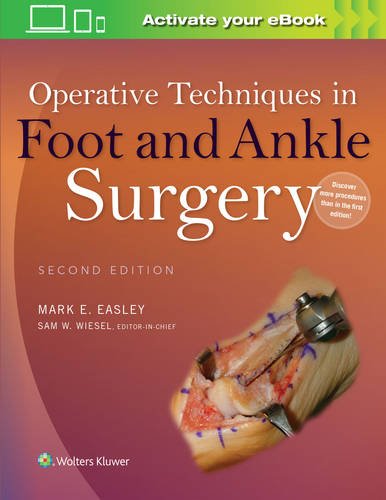
[N347.Ebook] Download Operative Techniques in Foot and Ankle SurgeryFrom LWW

Download Operative Techniques in Foot and Ankle SurgeryFrom LWW

Accumulate the book Operative Techniques In Foot And Ankle SurgeryFrom LWW begin with currently. Yet the new means is by gathering the soft documents of guide Operative Techniques In Foot And Ankle SurgeryFrom LWW Taking the soft documents can be conserved or stored in computer system or in your laptop. So, it can be greater than a book Operative Techniques In Foot And Ankle SurgeryFrom LWW that you have. The easiest means to disclose is that you can additionally conserve the soft documents of Operative Techniques In Foot And Ankle SurgeryFrom LWW in your ideal as well as readily available device. This condition will expect you too often review Operative Techniques In Foot And Ankle SurgeryFrom LWW in the spare times greater than talking or gossiping. It will not make you have bad habit, but it will certainly lead you to have far better practice to review book Operative Techniques In Foot And Ankle SurgeryFrom LWW.

Operative Techniques in Foot and Ankle SurgeryFrom LWW

Operative Techniques in Foot and Ankle SurgeryFrom LWW


Operative Techniques in Foot and Ankle SurgeryFrom LWW

Download Operative Techniques in Foot and Ankle SurgeryFrom LWW

Operative Techniques In Foot And Ankle SurgeryFrom LWW. A job could obligate you to always improve the understanding and experience. When you have no adequate time to improve it directly, you could obtain the encounter and expertise from checking out the book. As everybody understands, publication Operative Techniques In Foot And Ankle SurgeryFrom LWW is preferred as the window to open up the world. It indicates that reviewing publication Operative Techniques In Foot And Ankle SurgeryFrom LWW will give you a new means to discover every little thing that you need. As the book that we will provide below, Operative Techniques In Foot And Ankle SurgeryFrom LWW

As recognized, lots of people claim that publications are the custom windows for the globe. It doesn't suggest that getting book Operative Techniques In Foot And Ankle SurgeryFrom LWW will certainly suggest that you can buy this globe. Simply for joke! Reviewing a publication Operative Techniques In Foot And Ankle SurgeryFrom LWW will opened up somebody to think far better, to keep smile, to amuse themselves, and to urge the knowledge. Every book also has their characteristic to affect the viewers. Have you recognized why you read this Operative Techniques In Foot And Ankle SurgeryFrom LWW for?

Well, still confused of ways to obtain this publication Operative Techniques In Foot And Ankle SurgeryFrom LWW here without going outside? Merely attach your computer or device to the net and start downloading and install Operative Techniques In Foot And Ankle SurgeryFrom LWW Where? This page will show you the web link web page to download Operative Techniques In Foot And Ankle SurgeryFrom LWW You never stress, your favourite book will certainly be sooner all yours now. It will certainly be a lot easier to delight in checking out Operative Techniques In Foot And Ankle SurgeryFrom LWW by online or obtaining the soft documents on your device. It will no issue who you are and what you are. This e-book Operative Techniques In Foot And Ankle SurgeryFrom LWW is composed for public and you are one of them that can delight in reading of this publication Operative Techniques In Foot And Ankle SurgeryFrom LWW

Spending the downtime by reviewing Operative Techniques In Foot And Ankle SurgeryFrom LWW could supply such great experience even you are simply sitting on your chair in the office or in your bed. It will not curse your time. This Operative Techniques In Foot And Ankle SurgeryFrom LWW will guide you to have more precious time while taking remainder. It is quite delightful when at the twelve noon, with a cup of coffee or tea and also a publication Operative Techniques In Foot And Ankle SurgeryFrom LWW in your device or computer system display. By taking pleasure in the views around, right here you could begin checking out.

Operative Techniques in Foot and Ankle SurgeryFrom LWW

Achieve the best outcomes with expert, practical, highly visual guidance!
This expert clinical reference features just the foot and ankle surgery content from Operative Techniques in Orthopaedic Surgery, the comprehensive 4-volume set edited by Sam W. Wiesel, MD. Ideal for practitioners who wish to focus on mastering today’s best foot and ankle surgery procedures, it you step-by-step through each technique in a consistent manner, using concise, bulleted text, full-color illustrations, and full-color intraoperative photographs to clearly convey exactly what to look for and how to proceed.

Key Features:�

  • Includes eight new chapters that cannot be found in the large Operative Techniques in Orthopaedic Surgery, that cover total revision ankle arthroplasty and much more. � � �
  • Master the full range of essential techniques with comprehensive coverage of forefoot, midfoot, hindfoot, and ankle procedures, sports-related procedures, and much more.
  • Select the best operative approach for each patient with balanced coverage of all available options.
  • Gain rich, complete grasp of key nuances of technique by viewing a wealth of photographs and medical illustrations.
  • Benefit from a consistent approach�to each procedure, for quick and easy reference: definition, anatomy, physical exam findings, imaging and diagnostic studies, surgical management, perils and pitfalls, postoperative care, outcomes, and complications.
Now with the print edition, enjoy the bundled interactive eBook edition, offering tablet, smartphone, or online access to:
  • Complete content with enhanced navigation
  • A powerful search that pulls results from content in the book, your notes, and even the web
  • Cross-linked pages, references, and more for easy navigation
  • Highlighting tool for easier reference of key content throughout the text
  • Ability to take and share notes with friends and colleagues
  • Quick reference tabbing to save your favorite content for future use

  • Sales Rank: #920591 in Books
  • Published on: 2016-10-11
  • Original language: English
  • Number of items: 1
  • Dimensions: 11.00" h x 8.50" w x 2.25" l, .0 pounds
  • Binding: Hardcover
  • 1394 pages

Most helpful customer reviews

See all customer reviews...

Operative Techniques in Foot and Ankle SurgeryFrom LWW PDF
Operative Techniques in Foot and Ankle SurgeryFrom LWW EPub
Operative Techniques in Foot and Ankle SurgeryFrom LWW Doc
Operative Techniques in Foot and Ankle SurgeryFrom LWW iBooks
Operative Techniques in Foot and Ankle SurgeryFrom LWW rtf
Operative Techniques in Foot and Ankle SurgeryFrom LWW Mobipocket
Operative Techniques in Foot and Ankle SurgeryFrom LWW Kindle

Operative Techniques in Foot and Ankle SurgeryFrom LWW PDF

Operative Techniques in Foot and Ankle SurgeryFrom LWW PDF

Operative Techniques in Foot and Ankle SurgeryFrom LWW PDF

Monday, April 4, 2011

[N259.Ebook] Download OpenGL ES 3.0 Cookbook, by Parminder Singh

Download OpenGL ES 3.0 Cookbook, by Parminder Singh

OpenGL ES 3.0 Cookbook, By Parminder Singh When writing can alter your life, when creating can enhance you by offering much cash, why don't you try it? Are you still very baffled of where getting the ideas? Do you still have no idea with what you are going to create? Now, you will need reading OpenGL ES 3.0 Cookbook, By Parminder Singh An excellent author is a great viewers simultaneously. You could specify just how you compose relying on just what books to review. This OpenGL ES 3.0 Cookbook, By Parminder Singh can help you to address the trouble. It can be one of the appropriate resources to develop your writing skill.

OpenGL ES 3.0 Cookbook, by Parminder Singh

OpenGL ES 3.0 Cookbook, by Parminder Singh


OpenGL ES 3.0 Cookbook, by Parminder Singh

Download OpenGL ES 3.0 Cookbook, by Parminder Singh

Just how if there is a website that allows you to hunt for referred book OpenGL ES 3.0 Cookbook, By Parminder Singh from throughout the world author? Automatically, the website will certainly be incredible finished. Many book collections can be located. All will be so easy without complicated point to relocate from website to site to obtain the book OpenGL ES 3.0 Cookbook, By Parminder Singh wanted. This is the website that will provide you those expectations. By following this website you can obtain whole lots numbers of book OpenGL ES 3.0 Cookbook, By Parminder Singh collections from variants sorts of author as well as author prominent in this globe. The book such as OpenGL ES 3.0 Cookbook, By Parminder Singh and also others can be gotten by clicking good on link download.

Even the rate of a book OpenGL ES 3.0 Cookbook, By Parminder Singh is so budget friendly; many individuals are really thrifty to allot their cash to buy the e-books. The other factors are that they really feel bad and also have no time at all to head to guide company to search the book OpenGL ES 3.0 Cookbook, By Parminder Singh to review. Well, this is modern age; many e-books can be got effortlessly. As this OpenGL ES 3.0 Cookbook, By Parminder Singh and also more books, they can be entered very fast means. You will certainly not need to go outside to obtain this publication OpenGL ES 3.0 Cookbook, By Parminder Singh

By seeing this page, you have actually done the right staring point. This is your start to choose the e-book OpenGL ES 3.0 Cookbook, By Parminder Singh that you desire. There are great deals of referred publications to check out. When you would like to get this OpenGL ES 3.0 Cookbook, By Parminder Singh as your book reading, you could click the link web page to download OpenGL ES 3.0 Cookbook, By Parminder Singh In few time, you have owned your referred books as yours.

As a result of this publication OpenGL ES 3.0 Cookbook, By Parminder Singh is marketed by on the internet, it will certainly reduce you not to publish it. you can obtain the soft data of this OpenGL ES 3.0 Cookbook, By Parminder Singh to save money in your computer system, gizmo, and much more tools. It depends on your desire where and where you will certainly review OpenGL ES 3.0 Cookbook, By Parminder Singh One that you should consistently bear in mind is that reading publication OpenGL ES 3.0 Cookbook, By Parminder Singh will certainly endless. You will have going to check out various other e-book after finishing an e-book, and it's continually.

OpenGL ES 3.0 Cookbook, by Parminder Singh

Over 90 ready-to-serve, real-time rendering recipes on Android and iOS platforms using OpenGL ES 3.0 and GL shading language 3.0 to solve day-to-day modern 3D graphics challenges

About This Book
  • Explore exciting new features of OpenGL ES 3.0 on textures, geometry, shaders, buffer objects, frame buffers and a lot more using GLSL 3.0
  • Master intermediate and advance cutting edge rendering techniques, including procedural shading, screen space technique and shadows with scene graphs
  • A practical approach to build the font engine with multilingual support and learn exciting imaging processing and post process techniques
Who This Book Is For

If you are new to OpenGL ES or have some experience in 3D graphics, then this book will be extremely helpful in raising your expertise level from a novice to professional. The book implements more than 90 recipes to solve everyday challenges, helping you transition from a beginner to a professional.

What You Will Learn
  • Learn the essentials and exciting new features of OpenGL ES 3.0
  • Discover the physics behind fundaments of light and material concepts with easy-to-follow examples
  • Scratch the fragments with procedural shaders and learn how they work
  • Master the basics of texturing, use compressed textures, and learn numerous mapping techniques
  • Manage complex scenes with scene graphs and learn post-processing and image-processing techniques
  • Build your font engine with multilingual support
  • Master the working of recognized anti-aliasing techniques and implement FXAA and adaptive anti-aliasing
In Detail

"Write once, use anywhere" is truly the power behind OpenGL ES and has made it an embedded industry standard. The library provides cutting-edge, easy-to-use features to build a wide range of applications in the gaming, simulation, augmented-reality, image-processing, and geospatial domains.

The book starts by providing you with all the necessary OpenGL ES 3.0 setup guidelines on iOS and Android platforms. You'll go on to master the fundamentals of modern 3D graphics, such as drawing APIs, transformations, buffer objects, the model-view-project analogy, and much more. The book goes on to deal with advanced topics and offers a wide range of recipes on the light shading, real-time rendering techniques with static and procedure textures to create stunning visualizations and runtime effects.

  • Sales Rank: #2500634 in Books
  • Published on: 2015-05-28
  • Released on: 2015-05-30
  • Original language: English
  • Number of items: 1
  • Dimensions: 9.25" h x 1.16" w x 7.50" l, 1.93 pounds
  • Binding: Paperback
  • 493 pages

About the Author

Parminder Singh

Parminder Singh is a senior 3D graphics engineer at Continental Automotive, Singapore. He also works as a part-time freelancer. In 2006, Parminder obtained his CSE degree from Punjab Technical University. He is a strong believer of design simplicity. In his opinion, this is a key factor that plays an important role in building scalable and manageable products. With this philosophy and as a passionate 3D architect, he has worked in the fields of network simulations, geomodeling, navigation, automotive, and infotainment systems. His research interests include GPU-based real-time rendering, geospatial terrain rendering, screen-spaced techniques, real-time dynamic shadows, scientific visualization, scene graphs, and anti-aliasing techniques. He is an OpenGL ES trainer and a member of the Khronos Group. Parminder loves to take up challenges related to real-time rendering. His current research and work includes futuristic implementation for next-generation graphics in the automobile domain in order to create stunning data, user interface, and visualization effects (merging 2D and 3D concepts). His hobbies include cooking, traveling, sharing knowledge, and exploring the possibilities of applied physics and mathematics. Feel free to reach Parminder at https://www.linkedin.com/in/parmindersingh18.

Most helpful customer reviews

0 of 0 people found the following review helpful.
Too sparse for novices, too light for experts
By Richard Klassen
Depends on what you're looking for but the chapters are too short to be totally useful. If you're completely new to OpenGL ES, try a book with more narrative. If you have intermediate to advanced experience then this probably won't help

1 of 1 people found the following review helpful.
A very good resource for OpenGL ES 3 and one of the better cookbooks
By Amazon Customer
A filled cookbook with lots of examples and detailed descriptions.

It starts of tackling mobile devices iOS and Android. From the canonical "Hello, World" to using Java Native Interface (JNI) on Android. Get right into shaders. Chapter 3 introduces what is new in ES3 and that is welcome for those coming in with experience. Chapter 4 is very short and it would have been nice to have a couple more recipes on working with meshes. Chapter 6 comes back to shaders and subsequent move into materials and post processing effects. A nice inclusion of font rendering. The latter chapters serve as good introductions but don't expect deep dives into particle systems and shadows. It does a good job at presenting the recipes and letting the reader explore in more detail along with pointers of where to go next which sometimes is another recipe in the book. Overall it is a wealth of information and a good reference. I was pleased with the cookbook and overall I liked it.

I personally really appreciate the inclusion of using Blender 3D and though it is not a Blender book, tutorial, or introduction, I found it useful for a beginning level Blender user like myself. The author does show good pictures walking even the new to Blender user through those sections. This may not be true in all cases and many of the example images were definitely taken using Blender, but it works, and I am glad to see it show up.

2 of 2 people found the following review helpful.
It does not compile and it looks like it was hastily written due to grammatical and syntactical ...
By scanner_darkly
The source code for this book is really poorly written and not available outside of PacktPub. It does not compile and it looks like it was hastily written due to grammatical and syntactical errors. The examples in the book are descent but not very original. The code formatting in the pdf book is pretty squished. It feels like this entire book was put together in a rush and lacks any really reviews. I really wish this book would've have just used Java or Swift instead of writing everything in C++. The overhead of Java or Swift wouldn't make a difference since this book is all about examples anyway and not performance.

If you are looking to learn OpenGL I recommend the OpenGL 4 Cookbook by David Wolff instead.

See all 6 customer reviews...

OpenGL ES 3.0 Cookbook, by Parminder Singh PDF
OpenGL ES 3.0 Cookbook, by Parminder Singh EPub
OpenGL ES 3.0 Cookbook, by Parminder Singh Doc
OpenGL ES 3.0 Cookbook, by Parminder Singh iBooks
OpenGL ES 3.0 Cookbook, by Parminder Singh rtf
OpenGL ES 3.0 Cookbook, by Parminder Singh Mobipocket
OpenGL ES 3.0 Cookbook, by Parminder Singh Kindle

OpenGL ES 3.0 Cookbook, by Parminder Singh PDF

OpenGL ES 3.0 Cookbook, by Parminder Singh PDF

OpenGL ES 3.0 Cookbook, by Parminder Singh PDF

Sunday, March 20, 2011

[G653.Ebook] Download PDF Physical Diagnosis PreTest Self Assessment and Review, Sixth Edition (PreTest Clinical Medicine), by Jo-Ann Reteguiz

Download PDF Physical Diagnosis PreTest Self Assessment and Review, Sixth Edition (PreTest Clinical Medicine), by Jo-Ann Reteguiz

Be the initial to download this book Physical Diagnosis PreTest Self Assessment And Review, Sixth Edition (PreTest Clinical Medicine), By Jo-Ann Reteguiz as well as let read by coating. It is very easy to read this publication Physical Diagnosis PreTest Self Assessment And Review, Sixth Edition (PreTest Clinical Medicine), By Jo-Ann Reteguiz since you don't should bring this published Physical Diagnosis PreTest Self Assessment And Review, Sixth Edition (PreTest Clinical Medicine), By Jo-Ann Reteguiz all over. Your soft file publication can be in our device or computer system so you can take pleasure in checking out all over as well as every single time if needed. This is why whole lots varieties of people likewise check out the e-books Physical Diagnosis PreTest Self Assessment And Review, Sixth Edition (PreTest Clinical Medicine), By Jo-Ann Reteguiz in soft fie by downloading guide. So, be one of them who take all advantages of reading guide Physical Diagnosis PreTest Self Assessment And Review, Sixth Edition (PreTest Clinical Medicine), By Jo-Ann Reteguiz by on-line or on your soft file system.

Physical Diagnosis PreTest Self Assessment and Review, Sixth Edition (PreTest Clinical Medicine), by Jo-Ann Reteguiz

Physical Diagnosis PreTest Self Assessment and Review, Sixth Edition (PreTest Clinical Medicine), by Jo-Ann Reteguiz


Physical Diagnosis PreTest Self Assessment and Review, Sixth Edition (PreTest Clinical Medicine), by Jo-Ann Reteguiz

Download PDF Physical Diagnosis PreTest Self Assessment and Review, Sixth Edition (PreTest Clinical Medicine), by Jo-Ann Reteguiz

Physical Diagnosis PreTest Self Assessment And Review, Sixth Edition (PreTest Clinical Medicine), By Jo-Ann Reteguiz. One day, you will certainly find a brand-new journey and also understanding by spending even more cash. Yet when? Do you believe that you should obtain those all demands when having much money? Why do not you aim to get something basic at initial? That's something that will lead you to recognize more about the globe, adventure, some locations, history, home entertainment, as well as more? It is your personal time to continue reading practice. Among the books you can appreciate now is Physical Diagnosis PreTest Self Assessment And Review, Sixth Edition (PreTest Clinical Medicine), By Jo-Ann Reteguiz right here.

The advantages to take for reading the e-books Physical Diagnosis PreTest Self Assessment And Review, Sixth Edition (PreTest Clinical Medicine), By Jo-Ann Reteguiz are involving boost your life high quality. The life high quality will certainly not simply regarding the amount of expertise you will obtain. Even you check out the fun or enjoyable e-books, it will assist you to have improving life high quality. Really feeling fun will certainly lead you to do something completely. Additionally, guide Physical Diagnosis PreTest Self Assessment And Review, Sixth Edition (PreTest Clinical Medicine), By Jo-Ann Reteguiz will give you the session to take as a great factor to do something. You may not be ineffective when reading this e-book Physical Diagnosis PreTest Self Assessment And Review, Sixth Edition (PreTest Clinical Medicine), By Jo-Ann Reteguiz

Don't bother if you don't have sufficient time to head to the publication store as well as hunt for the favourite book to check out. Nowadays, the online publication Physical Diagnosis PreTest Self Assessment And Review, Sixth Edition (PreTest Clinical Medicine), By Jo-Ann Reteguiz is involving offer simplicity of checking out habit. You could not have to go outside to browse the publication Physical Diagnosis PreTest Self Assessment And Review, Sixth Edition (PreTest Clinical Medicine), By Jo-Ann Reteguiz Searching and downloading the e-book qualify Physical Diagnosis PreTest Self Assessment And Review, Sixth Edition (PreTest Clinical Medicine), By Jo-Ann Reteguiz in this write-up will give you better solution. Yeah, online book Physical Diagnosis PreTest Self Assessment And Review, Sixth Edition (PreTest Clinical Medicine), By Jo-Ann Reteguiz is a kind of digital e-book that you could get in the link download supplied.

Why must be this on the internet publication Physical Diagnosis PreTest Self Assessment And Review, Sixth Edition (PreTest Clinical Medicine), By Jo-Ann Reteguiz You may not require to go someplace to review guides. You can review this book Physical Diagnosis PreTest Self Assessment And Review, Sixth Edition (PreTest Clinical Medicine), By Jo-Ann Reteguiz every time and also every where you really want. Even it is in our leisure or sensation burnt out of the tasks in the workplace, this is right for you. Obtain this Physical Diagnosis PreTest Self Assessment And Review, Sixth Edition (PreTest Clinical Medicine), By Jo-Ann Reteguiz today and also be the quickest individual who finishes reading this book Physical Diagnosis PreTest Self Assessment And Review, Sixth Edition (PreTest Clinical Medicine), By Jo-Ann Reteguiz

Physical Diagnosis PreTest Self Assessment and Review, Sixth Edition (PreTest Clinical Medicine), by Jo-Ann Reteguiz

  • 500 USMLE-style questions and answers referenced to core textbooks and journal articles
  • Complete explanations discuss right and wrong answer options
  • All questions are reviewed by students who have recently passed the exams

  • Sales Rank: #2314757 in Books
  • Published on: 2006-03-17
  • Original language: English
  • Number of items: 1
  • Dimensions: 8.40" h x .79" w x 5.50" l, .95 pounds
  • Binding: Paperback
  • 434 pages

Review
"The questions are extremely realistic, well focusd.....".excellent companion for preparing for boards."

From the Back Cover
PreTest� is the medical student’s most dynamic weapon for mastering the USMLE Step 1 and Step 2.

With high-yield facts and mnemonics, it’s great for course review and clinical rotations, too! Physical Diagnosis: PreTest� asks the right questions so you’ll know the right answers.

PreTest� is the closest you can get to seeing the test before you take it.

This one-of-a-kind test prep guide helps you:
*Get to know material on the USMLE Steps 1 and 2
*Practice with 500 clinical vignette-style questions and referenced answers
*Build confidence, skills, and knowledge
*Review key facts for exam success

There are plenty of answers out there. But only PreTest� delivers USMLE type questions in USMLE format.

Open this PreTest� for:
*Format that simulates the exam
*500 board-type questions
*Referenced answers and explanations
*High-yield facts and mnemonics for each clerkship

STUDENT TESTED AND REVIEWED
“I used this book for the physical dx shelf exam at the end of our second year clinical methods course. The book was absolutely essential for this exam, and indeed proved very helpful for Step 1 as well.”
--FIVE-STAR ONLINE CUSTOMER REVIEW (of previous edition)

About the Author
Jo-Ann Reteguiz, MD, FACP, Associate Professor of Medicine and Vice-Chair for Education, UMDNJ-New Jersey Medical School, Newark, NJ.

Most helpful customer reviews

10 of 10 people found the following review helpful.
Surprisingly useful for Step I
By Lumiere
I used this book for the physical dx shelf exam at the end of our 2nd year clinical methods course. The book was absolutely essential for this exam, and indeed proved very helpful for step I as well. All questions were in vignette format, as is Step I. In contrast with some other books in the PreTest series, the questions were consistent and of an appropriate level of difficulty. The answers are extensive and helpful as well. THE QUESTIONS IN THIS BOOK WERE ACTUALLY FUN TO DO!!

2 of 2 people found the following review helpful.
Too difficult for Intro to clinical dx shelf exam
By Paul K
Our school recommended this book for the intro to clinical dx shelf exam even though I think it's supposed to be for Step 2 CK because ummm...that's what it SAYS ON THE BACK! As far as using this for the shelf exam, it is way harder than it needs to be and the explanations don't do any heavy lifting for you. Just think of all those crappy teachers you had in your first two years, they basically expect you to understand it all with very minimal effort on their behalf. Not ...fun ...at ...all.

Even though in a year I might know more and be more comfortable with the material, my plan is also not to use this book for Step 2 CK and hopefully find something better.

2 of 2 people found the following review helpful.
Great book for Clinical Medicine Shelf
By J. L. Lindsey
Great book for preparation of shelf exams, not just for clinical medicine shelf exam, but useful for others as well.

See all 5 customer reviews...

Physical Diagnosis PreTest Self Assessment and Review, Sixth Edition (PreTest Clinical Medicine), by Jo-Ann Reteguiz PDF
Physical Diagnosis PreTest Self Assessment and Review, Sixth Edition (PreTest Clinical Medicine), by Jo-Ann Reteguiz EPub
Physical Diagnosis PreTest Self Assessment and Review, Sixth Edition (PreTest Clinical Medicine), by Jo-Ann Reteguiz Doc
Physical Diagnosis PreTest Self Assessment and Review, Sixth Edition (PreTest Clinical Medicine), by Jo-Ann Reteguiz iBooks
Physical Diagnosis PreTest Self Assessment and Review, Sixth Edition (PreTest Clinical Medicine), by Jo-Ann Reteguiz rtf
Physical Diagnosis PreTest Self Assessment and Review, Sixth Edition (PreTest Clinical Medicine), by Jo-Ann Reteguiz Mobipocket
Physical Diagnosis PreTest Self Assessment and Review, Sixth Edition (PreTest Clinical Medicine), by Jo-Ann Reteguiz Kindle

Physical Diagnosis PreTest Self Assessment and Review, Sixth Edition (PreTest Clinical Medicine), by Jo-Ann Reteguiz PDF

Physical Diagnosis PreTest Self Assessment and Review, Sixth Edition (PreTest Clinical Medicine), by Jo-Ann Reteguiz PDF

Physical Diagnosis PreTest Self Assessment and Review, Sixth Edition (PreTest Clinical Medicine), by Jo-Ann Reteguiz PDF

Saturday, March 19, 2011

[B864.Ebook] Ebook USMLE Step 2 Clinical Skills Triage: A Guide to Honing Clinical Skills [Paperback]

Ebook USMLE Step 2 Clinical Skills Triage: A Guide to Honing Clinical Skills [Paperback]

The USMLE Step 2 Clinical Skills Triage: A Guide To Honing Clinical Skills [Paperback] has the tendency to be excellent reading book that is easy to understand. This is why this book USMLE Step 2 Clinical Skills Triage: A Guide To Honing Clinical Skills [Paperback] ends up being a preferred book to check out. Why don't you desire turned into one of them? You can enjoy checking out USMLE Step 2 Clinical Skills Triage: A Guide To Honing Clinical Skills [Paperback] while doing other activities. The presence of the soft file of this book USMLE Step 2 Clinical Skills Triage: A Guide To Honing Clinical Skills [Paperback] is kind of getting experience easily. It consists of how you ought to save the book USMLE Step 2 Clinical Skills Triage: A Guide To Honing Clinical Skills [Paperback], not in racks obviously. You may save it in your computer system tool and gizmo.

USMLE Step 2 Clinical Skills Triage: A Guide to Honing Clinical Skills [Paperback]

USMLE Step 2 Clinical Skills Triage: A Guide to Honing Clinical Skills [Paperback]


USMLE Step 2 Clinical Skills Triage: A Guide to Honing Clinical Skills [Paperback]

Ebook USMLE Step 2 Clinical Skills Triage: A Guide to Honing Clinical Skills [Paperback]

USMLE Step 2 Clinical Skills Triage: A Guide To Honing Clinical Skills [Paperback] In fact, book is really a window to the globe. Even lots of people may not such as reviewing publications; the books will certainly still offer the exact info regarding fact, fiction, encounter, experience, politic, religion, as well as a lot more. We are right here a web site that offers compilations of publications more than guide store. Why? We give you bunches of varieties of connect to obtain guide USMLE Step 2 Clinical Skills Triage: A Guide To Honing Clinical Skills [Paperback] On is as you need this USMLE Step 2 Clinical Skills Triage: A Guide To Honing Clinical Skills [Paperback] You could discover this book conveniently right here.

Why should be USMLE Step 2 Clinical Skills Triage: A Guide To Honing Clinical Skills [Paperback] in this website? Obtain much more revenues as exactly what we have actually informed you. You could find the other reduces besides the previous one. Ease of obtaining the book USMLE Step 2 Clinical Skills Triage: A Guide To Honing Clinical Skills [Paperback] as what you desire is additionally given. Why? Our company offer you many type of guides that will certainly not make you feel weary. You can download them in the web link that we supply. By downloading and install USMLE Step 2 Clinical Skills Triage: A Guide To Honing Clinical Skills [Paperback], you have taken the proper way to select the convenience one, as compared to the hassle one.

The USMLE Step 2 Clinical Skills Triage: A Guide To Honing Clinical Skills [Paperback] oftens be terrific reading book that is easy to understand. This is why this book USMLE Step 2 Clinical Skills Triage: A Guide To Honing Clinical Skills [Paperback] comes to be a favored book to check out. Why do not you desire turned into one of them? You can appreciate reading USMLE Step 2 Clinical Skills Triage: A Guide To Honing Clinical Skills [Paperback] while doing other tasks. The presence of the soft file of this book USMLE Step 2 Clinical Skills Triage: A Guide To Honing Clinical Skills [Paperback] is kind of obtaining encounter effortlessly. It consists of exactly how you ought to save the book USMLE Step 2 Clinical Skills Triage: A Guide To Honing Clinical Skills [Paperback], not in shelves certainly. You might wait in your computer gadget and also gadget.

By conserving USMLE Step 2 Clinical Skills Triage: A Guide To Honing Clinical Skills [Paperback] in the gizmo, the method you review will certainly likewise be much less complex. Open it and also begin reviewing USMLE Step 2 Clinical Skills Triage: A Guide To Honing Clinical Skills [Paperback], straightforward. This is reason that we recommend this USMLE Step 2 Clinical Skills Triage: A Guide To Honing Clinical Skills [Paperback] in soft file. It will not disrupt your time to get the book. In addition, the online system will certainly likewise alleviate you to browse USMLE Step 2 Clinical Skills Triage: A Guide To Honing Clinical Skills [Paperback] it, even without going someplace. If you have link web in your office, home, or gizmo, you could download and install USMLE Step 2 Clinical Skills Triage: A Guide To Honing Clinical Skills [Paperback] it straight. You could not likewise wait to obtain the book USMLE Step 2 Clinical Skills Triage: A Guide To Honing Clinical Skills [Paperback] to send by the vendor in various other days.

USMLE Step 2 Clinical Skills Triage: A Guide to Honing Clinical Skills [Paperback]

  • Published on: 2010
  • Binding: Unknown Binding

Most helpful customer reviews

3 of 3 people found the following review helpful.
Very useful
By Graceunderfire
Personally, this was one of the most useful books I've studied from during med school. I havn't thought I could really "study" for the CS part of Step 2 but, guess what, you can. Actually, some people think they just come in and have an instinct for it, I didn't think that and, yes, you need to know what your doing. This book gave great examples, put me in the mindframe, and I walked in knowing what to do. I scored well and there's nothing more to say...this book helped a lot.

1 of 1 people found the following review helpful.
like explaining how to do a breast exam
By Limor
In the introduction there is an explanation that you can choose if you with to write by hand or type the PN?! what?!
The cases are long with so much irrelevant word in between.
The physical exam is sometimes irrelevant, like explaining how to do a breast exam, which is forbidden in the test.
The examples of the patient note, the DD and work are disorganized and sometimes doesn't make enough sense.
I wouldn't recommend that book, It has some side notes about sag ways, and tips how to convey empathy which are nice.

1 of 1 people found the following review helpful.
40 Excellent Cases -- great
By mythos.felis
These are very useful. The cases don't follow the typical checklist format and instead there are dialogues between the doctor and the patients but still it's very well-organized and the Kindle version is superb -- true to form, it's a print replica, with proper pages and clear readable fonts. I especially like the notes and tips on each page. They encourage me to reconsider how to explain details to the patient, and to contemplate on bedside manners. The differentials are also quite helpful.

See all 5 customer reviews...

USMLE Step 2 Clinical Skills Triage: A Guide to Honing Clinical Skills [Paperback] PDF
USMLE Step 2 Clinical Skills Triage: A Guide to Honing Clinical Skills [Paperback] EPub
USMLE Step 2 Clinical Skills Triage: A Guide to Honing Clinical Skills [Paperback] Doc
USMLE Step 2 Clinical Skills Triage: A Guide to Honing Clinical Skills [Paperback] iBooks
USMLE Step 2 Clinical Skills Triage: A Guide to Honing Clinical Skills [Paperback] rtf
USMLE Step 2 Clinical Skills Triage: A Guide to Honing Clinical Skills [Paperback] Mobipocket
USMLE Step 2 Clinical Skills Triage: A Guide to Honing Clinical Skills [Paperback] Kindle

USMLE Step 2 Clinical Skills Triage: A Guide to Honing Clinical Skills [Paperback] PDF

USMLE Step 2 Clinical Skills Triage: A Guide to Honing Clinical Skills [Paperback] PDF

USMLE Step 2 Clinical Skills Triage: A Guide to Honing Clinical Skills [Paperback] PDF